9th January 2026
As we step into 2026, I want to begin by wishing everyone a very happy new year — and by saying a heartfelt thank you. Over the festive period, so many of our health and care colleagues, volunteers and partners worked tirelessly to keep services running and people safe. Your commitment, resilience and compassion continue to inspire me.
The cold spell we’ve experienced, alongside winter illnesses such as flu, means our services remain extremely busy, and I thank staff again – along with patients and families – for their kindness to one another. Across hospitals, GP practices, community teams, mental health services, social care and the ambulance service, colleagues are working side by side to prioritise care for the people who need it most.
With more cold weather likely, there are simple steps we can all take: keeping homes as warm as possible, checking in on neighbours or family members who may be vulnerable, making sure essential medications are topped up, and using NHS 111 when unsure where to go for help. And if you’re eligible, it’s still not too late to have your flu vaccination.
This month’s blog is longer than usual — simply because there is so much great work happening across our system. I’m really pleased to share just some of the highlights, and how they reflect the three key shifts we are making together.

From Hospital to Community
In last month’s blog, I shared how more than 4,000 people in Suffolk have accessed community-based mental health support through the Equity in Mind programme — a powerful example of our shift from hospital-based care to support rooted in local communities. This NHS-funded partnership with 22 voluntary and community organisations has helped people feel less isolated, more confident and, in many cases, less dependent on clinical services. From community gardens to creative programmes, people have found purpose, routine, friendship and hope closer to home.
That same spirit of bringing care closer to people is behind a new mobile chest X-ray pilot launched this winter by Norfolk and Norwich University Hospital (NNUH). For patients who would normally struggle to travel, clinicians can now arrange chest imaging in homes, nursing homes and care settings when a chest infection is suspected. The result is fewer unnecessary trips to the Emergency Department, people remaining safely in their communities, and faster reassurance when it’s needed most.
We are also seeing creativity in how we use local spaces. In Ipswich, councillors have approved plans to transform the former Inkerman pub into modern clinical accommodation for Cardinal Medical Practice. The building will provide new clinical rooms, group spaces and improved facilities, made possible through close collaboration between partners — and the generosity of the landlord. As the practice team said, this is a big moment for local people, and a great example of re-imagining community spaces to improve primary care access. In other estates news, Hoveton and Wroxham Medical Practice has announced plans to expand with a new branch at the Magna Medical Centre in Rackheath, with the building nearing completion and expected to open in early 2026.
In Norfolk and Waveney, our Primary Care Workforce Team has played a vital role in supporting our shift from hospital to community-based care — building the capacity and confidence needed for more people to be cared for closer to home. Over the past year, responses to the NHS General Practice Staff Survey have risen by 9%, giving us three solid years of insight to shape improvement. Of 39 workforce programmes, almost 80% are on track and one in five are already exceeding expectations.
Through initiatives such as Golden Hellos, we have recruited 47 new dental colleagues — contributing to the first rise in our dental workforce in five years — alongside 13 new dental apprenticeships. The Primary Care Golden Hello programme has also supported 34 GPs, nurses, pharmacists and paramedics into roles locally, while targeted wellbeing and visa support are helping retain staff. With Norfolk and Waveney now ranked first in the East of England for positive GP workforce variation, this work is strengthening primary care teams and supporting our long-term goal of delivering more care in the community.
And finally, The Queen Elizabeth Hospital in King’s Lynn has been shortlisted for a national HSJ Partnership Award for its work transforming patient discharge and recovery. Working closely with partners, the team is helping people leave hospital sooner, recover safely at home or in the community, and easing pressure on services.
From Analogue to Digital
Our shift from analogue to digital is helping us deliver safer, faster and more effective care — and we’re seeing the benefits across our system. At NNUH, national recognition for outstanding aortic surgery reflects how innovation and smarter ways of working are improving outcomes for patients. As the fourth-busiest centre in England, teams are achieving some of the best results nationally, with faster access to urgent procedures, shorter hospital stays and safer treatment. By embracing advanced endovascular techniques and new technologies, more people are now able to receive specialist care closer to home — supported by exceptional teamwork across clinical services.
Digital innovation is also helping free up valuable clinical time. Norfolk Community Health and Care is piloting Ambient Voice Technology, which listens during consultations and securely drafts notes. Early feedback shows reduced typing, quicker letters and more time focused on patients. Importantly, patients can always opt out and clinical judgement remains central — this is about supporting staff, not replacing them.
But innovation in our system goes beyond technology alone. It’s also about how we learn, lead and continuously improve. That principle has been central to the Integrated Care Academy, which I was pleased to celebrate recently alongside colleagues including Dr Caroline Angus and Professor Jenny Higham. Over the past five years, the Academy has created a unique space for leadership development, coproduction and research — helping turn new ideas, such as pioneering work on AI in spirometry, into real improvements in care. As the Academy closes later this month, its legacy will live on through the partnerships, skills and confidence it has helped build across our system, supporting teams to work smarter and embed improvement into everyday practice. The ICA’s full story and achievements are captured in its 2025 Impact Report.
And sometimes, innovation is about simple, practical changes that make everyday care better. At West Suffolk NHS Foundation Trust, reusable silicone tourniquets have replaced single-use versions across phlebotomy services. They are more comfortable for patients, can be reused thousands of times and are expected to save around £20,000 a year. It’s a reminder that innovation doesn’t always need to be high-tech — it just needs to be thoughtful, evidence-based and focused on improving care.
From Sickness to Prevention
Our work on prevention is gaining national attention. Colleagues from Active Norfolk, Norfolk and Waveney ICB and Norfolk County Council Public Health recently submitted evidence to the Health and Social Care Committee’s inquiry into Healthy Ageing, focused on the role of physical activity. Drawing on our Active NoW programme, the submission showed how we are embedding movement into prevention and care. As a result, Norfolk and Waveney were invited to Westminster to give oral evidence, with Ryan Hughes attending on our behalf — a strong recognition of the partnerships and progress we are making to help people age well.
We continue to see strong results from the NHS Lung Cancer Screening Programme across the East of England, with 603 earlier diagnoses and 72% detected at stages 1 and 2. Mobile units will now extend into more communities including Newmarket, Ipswich, King’s Lynn and Bury St Edmunds — bringing reassurance and earlier treatment to more people.
At NNUH, a £9 million national sustainability grant will support the installation of an air-source heat pump system — reducing reliance on fossil fuels and cutting an estimated 2,900 tonnes of carbon every year. This investment isn’t just about infrastructure; it’s about prevention. Cleaner energy, improved air quality and more resilient buildings all contribute to healthier communities, while the financial savings can be reinvested in patient care. It’s a great example of how environmental sustainability and health go hand in hand, supported by strong collaboration across estates and sustainability teams.
Investment in safer walking, cycling and wheeling is also gathering pace, with £12.5 million from Active Travel England awarded to Suffolk. This funding will improve routes and crossings, supporting everyday physical activity, reducing congestion and creating cleaner, safer streets for families.
And as many people feel pressure from “new year, new you” expectations, Norfolk and Suffolk NHS Foundation Trust’s (NSFT) Recovery College is offering gentle, supportive workshops and one-to-one coaching — encouraging people to take things one day at a time and reminding them that support is always available.
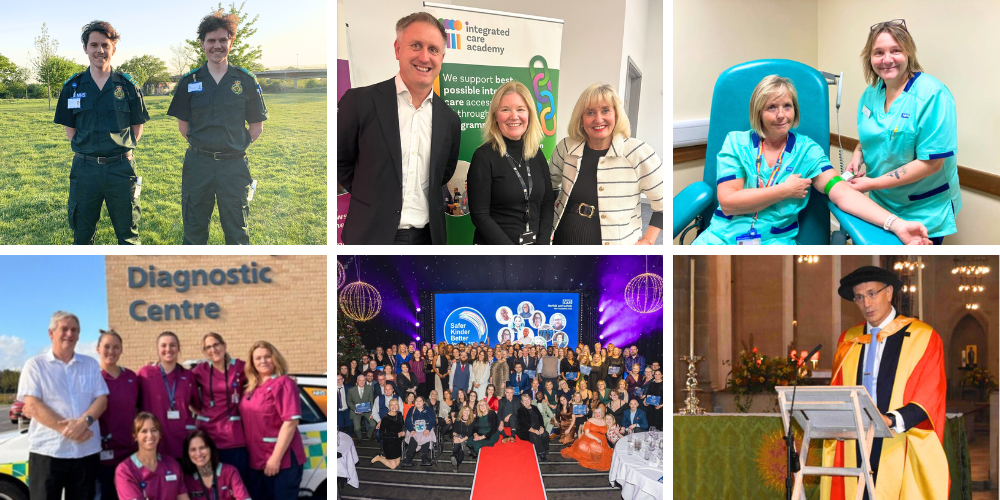
From left to right, top row: Dean and Ryan Appleton, Ed with Dr Caroline Angus, ICA Director and Professor Jenny Higham, Vice-Chancellor at the University of Suffolk at the ICA Event, Phlebotomists at the West Suffolk Hospital (WSH) in Bury St Edmunds, East Diagnostics Imaging Network, NSFT Safer, Kinder, Better Awards, Dr Nikos Savvas DL, Chief Executive of Eastern Education Group
Celebrating Our People and Communities
Across our system, there is so much to be proud of. Nearly 700 nominations were received for this year’s NSFT Staff Awards, with special congratulations to Annah Mhlanga-Chirimuta and Talent Beiley, whose inspirational leadership was recognised with the Chair’s Award. Additionally, NSFT’s Forensic and Secure Services have achieved national accreditation from the Royal College of Psychiatrists for Catton and Drayton Wards at Northside House — recognising compassionate, consistently safe care and marking a significant step forward following their recent ‘good’ CQC rating.
I’m delighted to celebrate some well-deserved recognition for our Suffolk and North East Essex (SNEE) Training Hub. Their leadership programme with Xytal has been shortlisted for an HSJ Award for Most Effective Contribution to Integrated Health and Care, reflecting the way it is strengthening collaboration across services. We’re also proud of Julie White, named Apprenticeship Advocate of the Year by the Eastern Education Group, and of the Hub’s success at the National General Practice Awards, where — alongside the National Association of Sessional GPs — it won the Recruitment and Staffing category for an innovative model that reduces agency reliance and builds local stability.
In other news, the Beyond Limits mentoring programme in Norfolk is helping care-experienced young people build confidence, aspiration and belonging; and more than 500 students explored future careers at the ESNEFT Careers Fair, gaining a real sense of what a future in the NHS could look like.
I’d also like to shine a light on a new short documentary featuring writer and comedian Adam Buxton, who spends time with foster families across Norfolk and Suffolk to show the real, everyday impact of fostering — the challenges, the joy, and the extraordinary kindness involved. Through simple moments of family life, the film helps demystify fostering and encourages more people to consider offering children stability and care. My sincere thanks go to every foster carer across our area for the difference you make each and every day.
Congratulations to Dean and Ryan Appleton, identical twin volunteers from Essex, who have each been awarded the British Empire Medal in the 2026 New Year’s Honours for more than a decade of lifesaving support as community first responders with the East of England Ambulance Service — supporting thousands of patients across Clacton, Colchester, Nayland and Tiptree, including throughout the COVID-19 pandemic. Their commitment and compassion sit alongside another exceptional achievement within our system this year: congratulations also to Dr Nikos Savvas DL, Chief Executive of Eastern Education Group, who has been awarded an OBE for his outstanding contribution to education over more than 25 years. By championing inclusive learning, expanding opportunities, and leading innovation in skills, sustainability and digital education, Dr Savvas has helped transform lives and strengthen communities. Together, these honours reflect the very best of public service — and we are immensely proud and grateful for their leadership, dedication and example.
Finally, I wish to say how heartfelt and lovely it was to see the EEAST Christmas Toy Drive in action. Thanks to the generosity of staff, volunteers and our wider communities, more than 150 gifts were delivered to children spending Christmas in hospitals, hospices and community settings across Suffolk and North East Essex. At a time that can feel anxious and lonely, our teams helped create moments of joy, normality and reassurance for children and their families — a powerful reminder that care is emotional as well as clinical.
Across all this work, four themes stand out: compassion, collaboration, innovation and prevention. They show a system that isn’t standing still — but one that is continually improving, learning and caring.
Thank you to everyone contributing to this effort — whether on the frontline, behind the scenes, in our communities or working in partnership. Together, we are building services that are stronger, fairer and more responsive to the people we serve.
Best wishes,
Ed